
Decoding the Epic Voyage of Portuguese Immigrants to Hawaii
Aloha, young historians! Today, we’re diving into a fascinating chapter of Hawaiian history—the incredible journey of Portuguese immigrants who made their way to our beautiful islands in the late 19th and early 20th centuries. Hawaii is a true melting pot of cultures, and the Portuguese community played a vital role in shaping the islands we know today.
At the heart of this story is a remarkable document called the Ship Arrival Timeline, preserved by the Portuguese Culture & Historical Center (PCHC). This isn’t just a boring list of dates and names; it’s a treasure trove of stories about families and dreams. Imagine every ship that sailed from the distant Atlantic islands of Portugal to the sunny shores of Hawaii, carrying the hopes of those aboard.
The Long Haul Begins: The Pioneers of the Sea (1878–1881)
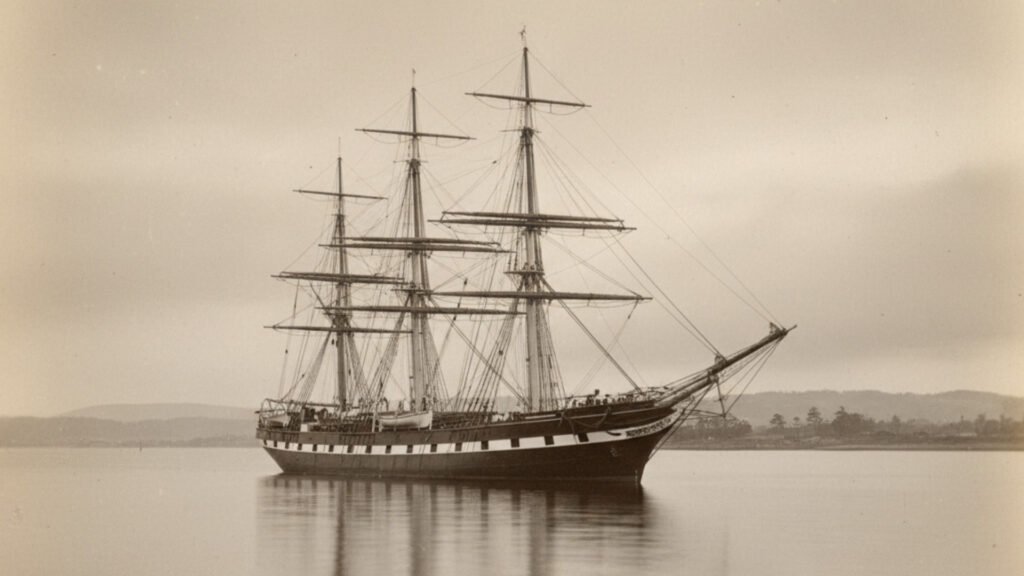
Our journey starts in 1878, when the first large group of Portuguese laborers arrived in Hawaii. The ship that marked this historic moment was the German Bark Priscilla, which landed on September 30. This vessel carried 123 passengers—65 men, 22 women, and 36 children. Right away, we see that this was more than just a work trip; these were families ready to settle down and build a new life. Their journey took a grueling 120 days!
The following year, another ship, the British Ravenscrag, arrived with 428 passengers, including talented woodworkers who brought along a small instrument called the machete or braguinha. This little instrument would evolve into the beloved ukulele we all know today! The Ravenscrag’s journey lasted 123 days and was not just about transporting people but also about carrying the seeds of Hawaii’s rich musical culture.
Then, in January 1880, the British Bark High Flyer arrived, completing its journey in just 99 days. This early era was marked by long and challenging voyages, testing the strength and determination of every passenger.
The Steamship Surge: Accelerating the Diaspora (1882–1884)
As we move into the early 1880s, a major change took place. The slow sailing ships were replaced by fast steamships, which could carry more people in less time. This was a game changer for the sugar plantation owners who needed more workers.
The timeline lights up with the arrival of the British steamers. For example, the S.S. Monarch arrived on July 2, 1882, with 857 passengers in just 57 days! The S.S. Vapor Hansa followed closely, bringing a whopping 1,177 people in only 53 days. This marked a turning point, as for the first time, a single ship brought over a thousand Portuguese immigrants to Hawaii.
The S.S. Hankow arrived in July 1883 with an astonishing 1,462 passengers, showcasing the growing desire of families to put down roots in their new home. Notably, these ships were filled with children, proving that the Portuguese were committed to building a future for their families in Hawaii.
A Map of Origins: From the Azores to Mainland Ports
While Hawaii was the destination, the journey began in various places across Portugal. The earliest immigrants came from Madeira, while the Azores quickly became the largest source of newcomers. Later, ships began to depart from mainland Portugal, showing how widespread the recruitment efforts had become.
These ships, flying the flags of different nations like Britain and Germany, highlight the international nature of this migration. It wasn’t just a local effort; it was a global movement of people seeking a better life.
The Final, Great Waves: Securing the Legacy (1906–1913)
After a lull in immigration, the timeline shows a surge in the early 20th century as Hawaii sought to solidify its population. The Spanish Heliopolis made a remarkable arrival on April 26, 1907, carrying 2,246 people in just 47 days! This was the largest group of Portuguese immigrants to arrive at once, showcasing the scale of this migration.
The British Willesden made two massive trips in 1911 and 1913, bringing thousands more. The timeline closes in 1913, marking the end of this large-scale organized immigration.
A Historical Anchor: Preserving the Names and Narratives
The Ship Arrival Timeline is more than just a historical record; it’s a key to understanding our roots. Each ship name—from the humble Priscilla to the grand Heliopolis—connects us to the ancestors who arrived on our shores. Thanks to the PCHC, we can digitally preserve these stories and help descendants trace their family histories.
The tale of the nearly 18,000 Portuguese individuals who crossed oceans to reach Hawaii is a powerful reminder that our island identities are built on epic voyages and the courage of those who came before us. So, the next time you strum a ukulele or enjoy a Hawaiian feast, remember the rich tapestry of cultures that makes Hawaii truly special. Aloha!