
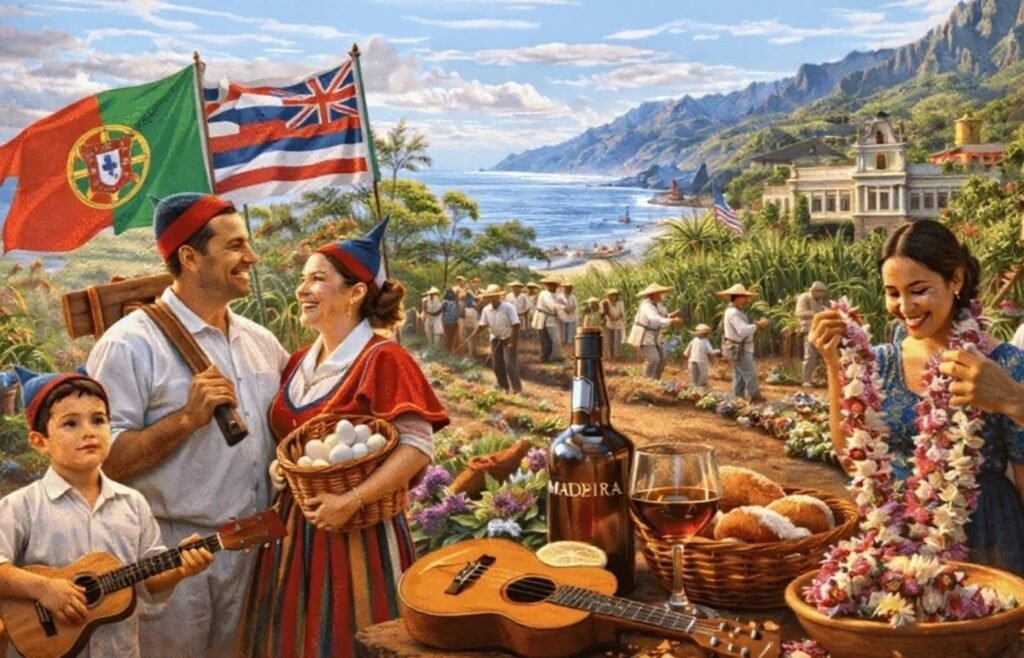
Portuguese in Hawaii: Immigration and Hawaiian Culture
Hawaii, a melting pot of cultures, owes much of its diverse heritage to the waves of immigrants who sought new lives on its shores. Among these, the Portuguese community has left an indelible mark, shaping the islands’ social fabric and enriching its traditions. This is the story of Portuguese immigration to Hawaii, their struggles, contributions, and the lasting legacy they’ve woven into the vibrant tapestry of Hawaiian culture.
History of Portuguese Immigration to Hawaii
First Portuguese Immigrants in Hawaii
The story of the Portuguese in Hawaii begins with humble origins. The Hawaiian census of 1878 recorded a mere 438 Portuguese residents, making up only 0.8% of the population of 57,985 people. Hailing predominantly from Madeira and the Azores, these first Portuguese immigrants to Hawaii often arrived as sailors aboard whaling ships. While a few were accompanied or later joined by their wives, women constituted only a small portion of this pioneering Portuguese community. Despite their small numbers, those who made the journey to the Hawaiian Islands found opportunity and often chose to stay, integrating into the local society. The first Portuguese immigrant officially recorded was Dr. João (John) Elliott de Castro, who arrived in 1814 and became the personal doctor for King Kamehameha I.
Reasons for Immigration from Portugal
The conditions in Hawaii around 1878 proved favorable for immigration. King Kalākaua, who had recently ascended the Hawaiian throne, fostered closer ties with Europe, coinciding with a booming Hawaiian economy driven by increased sugar exports to California. This economic growth created a high demand for laborers to work on the sugarcane plantations. The native Hawaiian population had been decimated by disease, leading to a shortage of workers, opening opportunity for Portuguese immigrants. Madeira and the Azores had long cultivated sugarcane, equipping many Portuguese settlers with the necessary skills to thrive in Hawaii’s burgeoning agricultural sector.
Impact of Immigration on Hawaiian Society
Hawaii had earlier experienced an influx of Chinese workers, comprising nearly 10% of the population by 1878. However, facing criticisms and social challenges, the Hawaiian government and plantation owners sought alternative labor sources. They offered incentives to attract immigrants of European descent, like the Portuguese, to work on the cane fields. Although Portuguese immigration to Hawaii slowed after 1887, with King Kalākaua’s power diminished and the arrival of other ethnic groups increased, nearly 16,000 Portuguese immigrants had arrived by 1911. Many eventually emigrated to the mainland United States, particularly California, seeking equality and opportunity due to resentment at being treated as “second-class citizens.”
Cultural Integration of Portuguese in Hawaii
Adapting to Hawaiian Culture
The journey for the Portuguese immigrants to Hawaii was more than just a geographical relocation; it was a profound cultural adaptation. Leaving behind the familiar landscapes of Madeira and the Azores, these Portuguese families embraced the traditions and customs of the Hawaiian Islands. While holding onto their Portuguese ancestry, they integrated into the multi-ethnic society, forging a unique identity that blended their heritage with the spirit of Hawaii. The Portuguese in Hawaii learned to navigate a new social landscape, respecting and adopting aspects of Hawaiian culture.
Traces of Portuguese Culture in Hawaii
The echoes of Portuguese culture resonate throughout Hawaii even today. One popular Portuguese tradition in Hawaii today is the making of malasadas. These sweet treats, born from the resourceful kitchens of Portuguese immigrants to Hawaii from Madeira and the Azores, are a testament to their ingenuity. The tradition in Hawaii of the Holy Spirit Festival (Festa do Espírito Santo), celebrated since 1901, brings communities together with a parade and feast. It is just one example of how the Portuguese have enriched Hawaii with their culture and traditions.
Influence on Hawaiian Traditions and Practices
Perhaps the most iconic contribution of the Portuguese to Hawaii is the ukulele. This beloved instrument, based on the traditional Portuguese braguinha (cavaquinho), has become synonymous with Hawaiian music and culture. The story goes that Madeiran cabinet makers Manuel Nunes, Augusto Dias, and José do Espírito Santo brought the ukulele to Hawaii, forever changing the soundscape of the islands. Their arrival marked a pivotal moment, solidifying the Hawaiian connection to the culture and traditions brought by these Portuguese settlers. A Portuguese settler, Jacinto Pereira, suggested bringing workers from Madeira and Azores to Hawaii.
Portuguese Community in Hawaii Today
Portuguese Descent and Identity
Today, the story of the Portuguese in Hawaii continues to evolve. The impact of the first Portuguese immigrant is still seen as 4.3% of Hawaiians claimed Portuguese ancestry in 2008. Native Hawaiian speakers called the Portuguese immigrants “Pukikī.” These newcomers, often devout Roman Catholics with strong family bonds, significantly contributed to the islands’ cultural mosaic.
The physical characteristics of the Portuguese immigrants to Hawaii also played a role in their experiences. Many Portuguese were short, slender, and dark-skinned from working long hours on the plantations in the sun. These traits, coupled with language barriers and limited literacy, contributed to the challenges they faced. While the Portuguese immigrants in Hawaii maintained a strong oral tradition, they also faced prejudice from some who viewed them as different.
Role of Portuguese Chamber of Commerce
The Portuguese Chamber of Commerce plays a pivotal role in preserving and promoting Portuguese culture within the Hawaiian Islands. It serves as a hub for Portuguese communities, facilitating connections among individuals, businesses, and organizations with Portuguese ancestry and culture. This Chamber of Commerce organizes cultural events, language classes, and educational programs, strengthening the bond between Hawaii and its Portuguese roots, further bolstering the Hawaiian connection for future generations.
Celebrating Portuguese Heritage in Hawaii
One popular Portuguese tradition in Hawaii is the Holy Spirit Festival (Festa do Espírito Santo), which has been celebrated since 1901. This tradition in Hawaii occurs each May with a parade and feast. This event is a vibrant display of Portuguese culture and traditions, bringing Portuguese communities together to celebrate their heritage. The festival commences on a Friday night, followed by religious statue decoration on Saturday.
Here’s how the festival culminates on Sunday:
- A young woman is selected to portray Queen Isabel, the sixth queen of Portugal, and leads a colorful parade with her court.
- This procession is followed by a mass, during which a priest performs the “Blessing of the meat and bread.”
The celebration concludes with a grand feast that embraces a tradition of charity and feeding the poor, where food is shared with all in attendance. Traditional Portuguese fare such as malasadas, paodoce (sweet bread), bean soup, and Portuguese sausages are featured at the feast, a true taste of the Azores to Hawaii.
Conclusion: The Hawaiian Connection to Portuguese Roots
Reflections on Portuguese Ancestry
Reflecting on the Portuguese ancestry in Hawaii reveals a deep and intricate connection. The Portuguese immigration to Hawaii began generations ago, with Portuguese families arriving from Madeira and the Azores to work on the plantations. These Portuguese settlers brought with them their traditions, values, and skills, which have interwoven with the fabric of Hawaiian society. The legacy of these first Portuguese endures today.
The Ongoing Influence of Portuguese Culture in Hawaii
The ongoing influence of Portuguese culture in Hawaii is evident in various aspects of island life. From the culinary traditions to the sounds of the ukulele, traces of Portuguese culture can be found throughout the Hawaiian Islands. The Portuguese tradition in Hawaii of sharing food, celebrating together, and honoring their heritage continues to enrich the cultural landscape of the islands. This cultural exchange has created a unique blend of traditions, making the Hawaiian connection to its Portuguese roots all the more special.
Future of Portuguese Heritage in Hawaii
Looking ahead, the future of Portuguese heritage in Hawaii seems bright. As younger generations embrace their Portuguese ancestry, there is a renewed interest in preserving and promoting Portuguese culture. Through cultural events, language classes, and community initiatives, the Portuguese in Hawaii are working to ensure that their traditions and values continue to thrive. By honoring their past and embracing their heritage, the Portuguese communities in Hawaii can contribute to the ongoing vitality and diversity of the islands for generations to come. The Hawaiian government supports these efforts.